©

Louis Garnier Photography - Grand Chambéry Alpes Tourisme

The Elephant Fountain

You can’t visit Chambéry without coming across its famous elephants. An iconic landmark of the city since 1838, the Elephant Fountain is as intriguing as it is entertaining. With its blend of Savoyard history, local anecdotes and intricate carvings, it is one of the must-see attractions in the historic centre.

Elephants  An iconic symbol of Chambéry

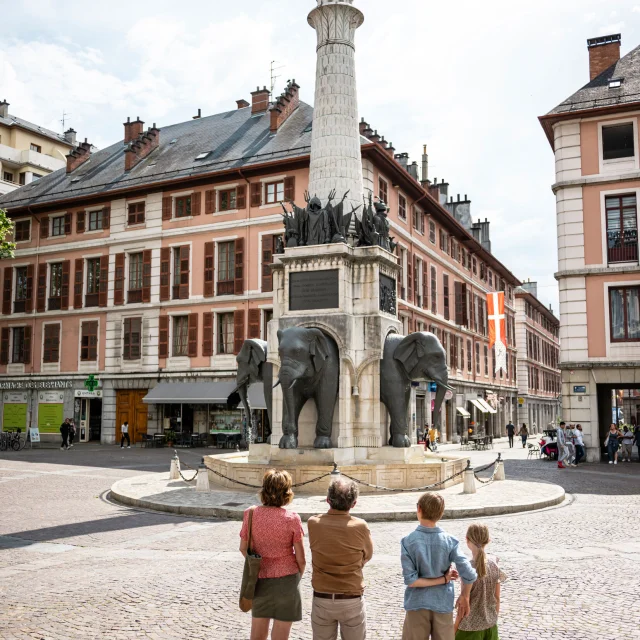
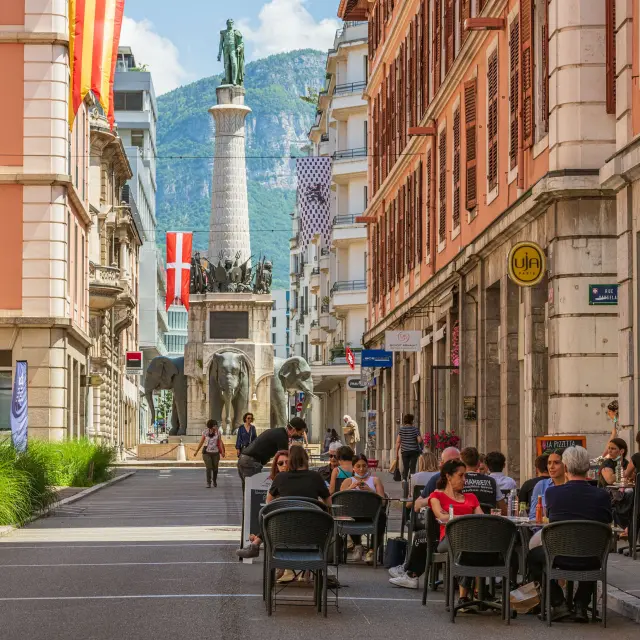
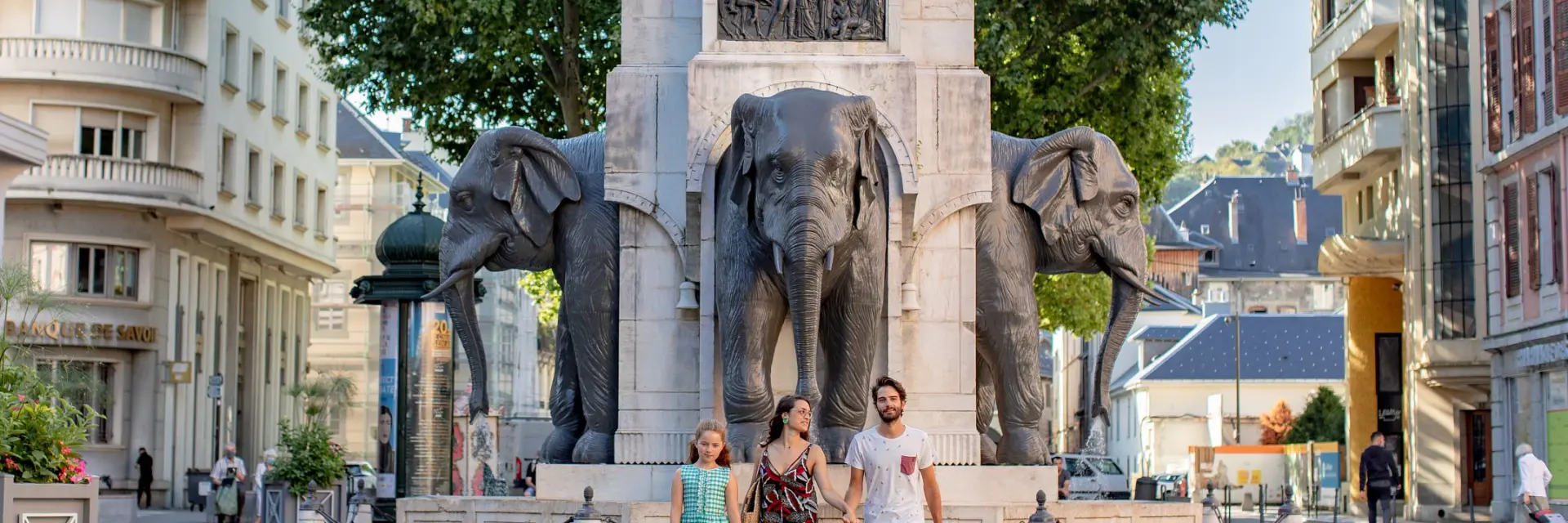
Standing in the heart of the city for nearly two centuries, the Fontaine des Éléphants has become the true symbol of Chambéry. Situated at the entrance to the historic centre, it welcomes residents and visitors alike with its four impressive Indian elephants gathered around a tall carved column.

Visible from the main avenues of the city centre, the monument is often the first thing people see when they arrive in Chambéry. The people of Chambéry meet there, visitors photograph it from every angle, and the surrounding terraces make the most of its unique setting. Much more than just a fountain, it tells part of Savoy’s history and of the special bond between Chambéry and General de Boigne.

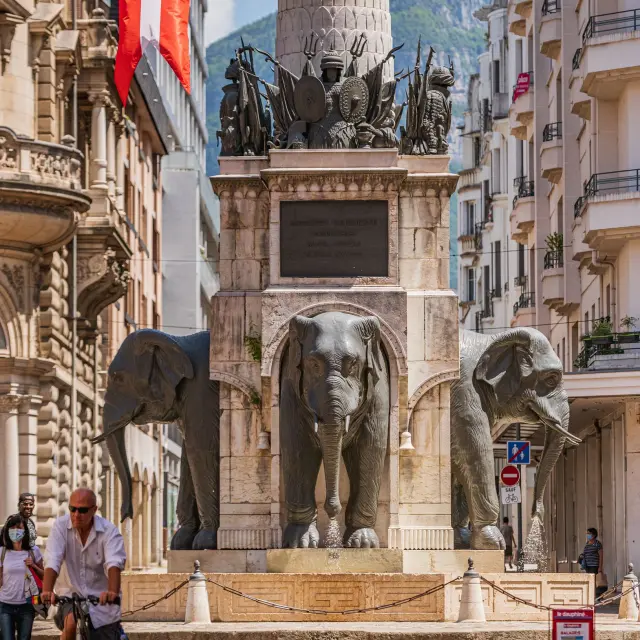
Some people like to believe, in fact , that the elephant became the symbol of Chambéry as a tribute to Hannibal and his war elephants, which are said to have crossed the Alps in 218 BC. A lovely legend, but a false one. One detail is enough to confirm this: look at their ears. Small and rounded, they are characteristic of the Asian elephant, not the African elephant that Hannibal used in his campaigns.
A monumental fountain since 1838

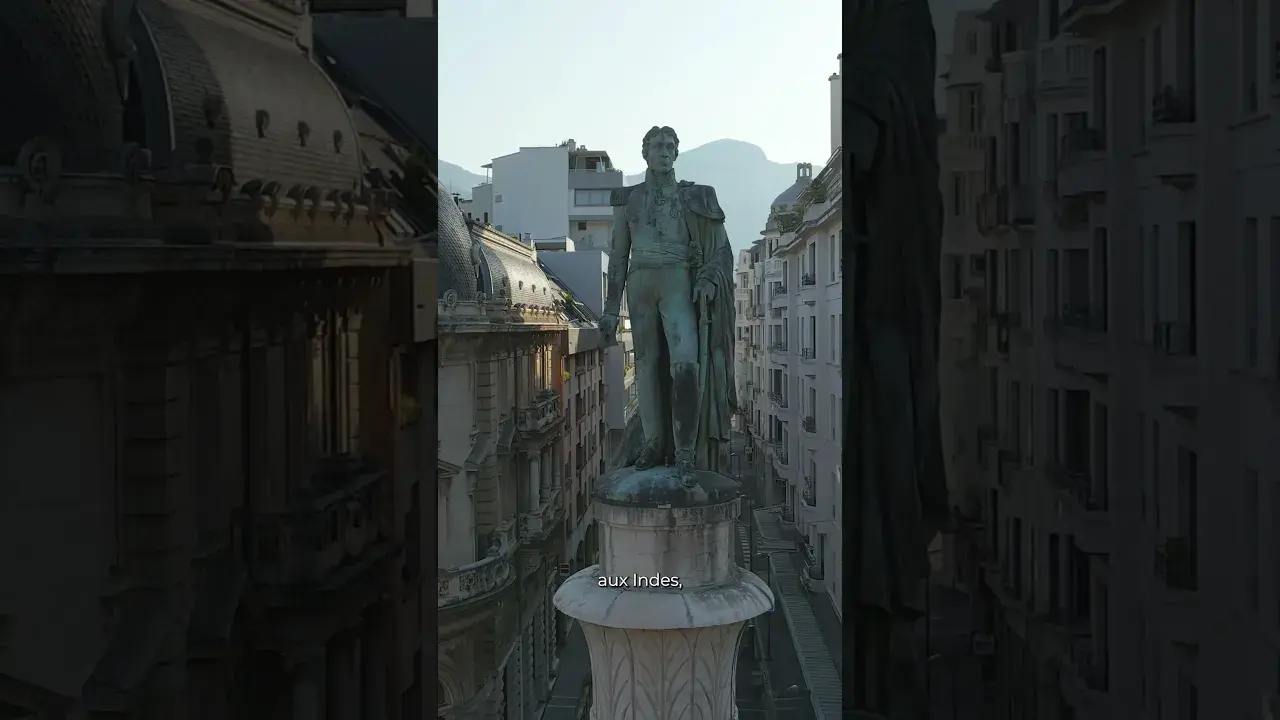
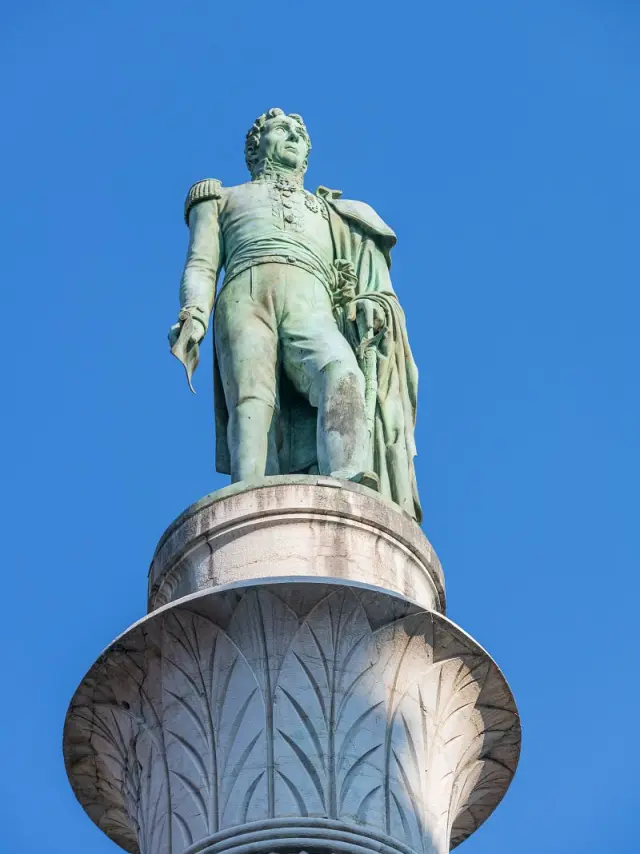
The Elephant Fountain was unveiled on 10 December 1838 in honour of Benoît de Boigne, a great benefactor of Chambéry.

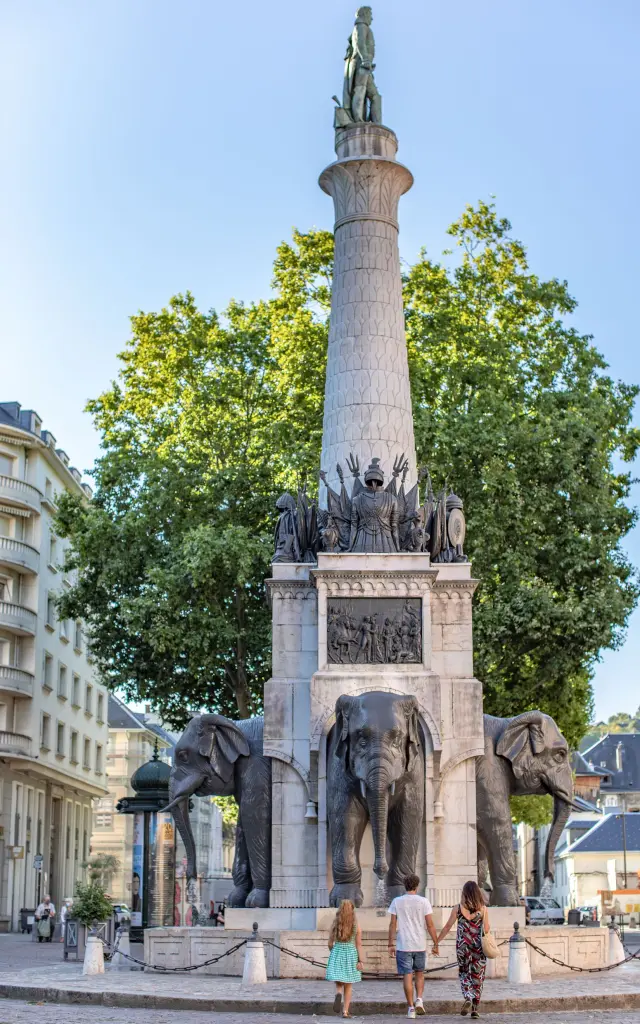
Created by the Grenoble-based sculptor Pierre-Victor Sappey, the work is impressive in its scale: nearly 18 metres high and weighing several tonnes of stone, bronze and cast iron.

The central column resembles a palm tree trunk, a nod to General de Boigne’s travels in India. At the top, his statue dominates the square, whilst at the base, four elephants rise up around the monument.

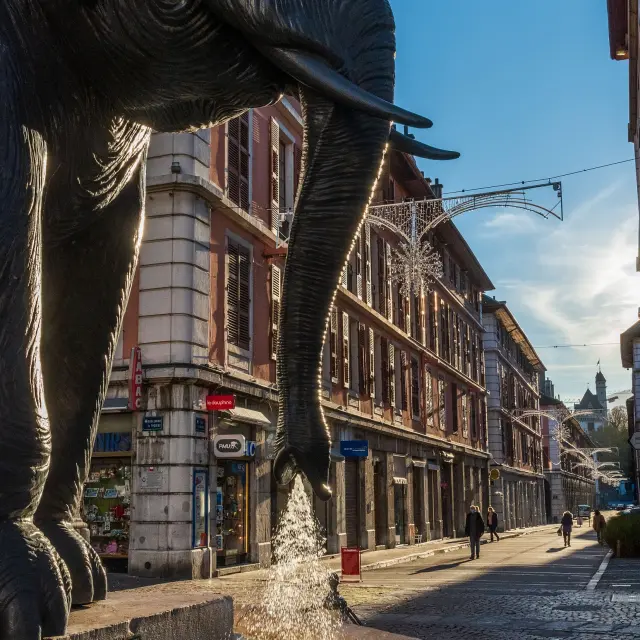
Their trunks also serve as water jets, bringing the fountain to life ever since it was first built.

Who was General de Boigne?

Born in Chambéry in 1751, Benoît de Boigne led a life straight out of an adventure novel. A soldier, explorer and businessman, he travelled throughout Europe and the East before making his fortune in India.

After serving in several armies, he became one of the leading military commanders in northern India in the service of the Marathas. His success then enabled him to return to Chambéry with an immense fortune.

Deeply attached to his hometown, he funded several major urban projects, including the famous Rue de Boigne. Upon his death in 1830, Chambéry decided to honour him with this spectacular monument, which has now become the city’s symbol.

Why the people of Chambéry are they talking about the “4 arseholes”?

This is probably the most famous anecdote about Chambéry.
If you look closely at the fountain, you’ll notice that the four elephants are depicted solely from the front. Their bodies are attached to the central column, so their hindquarters are never visible.
Very quickly, the locals gave the monument a nickname that has since become legendary: “the 4 sans cul”. With humour and self-deprecation, this expression is now as much a part of Chambéry’s heritage as the monument itself. It’s almost impossible to visit Chambéry without hearing this story told during a guided tour or in conversation on a terrace.

 A work brimming with symbols and details

The Elephant Fountain is full of surprises. The longer you look at it, the more details you notice.

The elephants, cast in iron, symbolise General de Boigne’s Indian campaigns. The central column resembles an oriental palm tree, whilst several inscriptions pay tribute to his career and his generosity towards Chambéry.

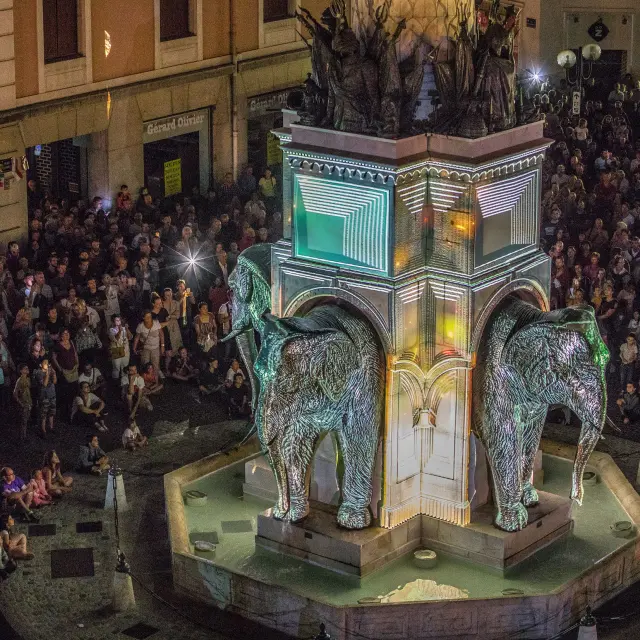
Day and night, the atmosphere changes completely. Under the night-time lighting, the elephants take on a whole new dimension.

 A spectacular restoration

Between 2013 and 2015, the Elephant Fountain underwent major restoration work. For several months, the elephants were temporarily removed from the square so that they could be refurbished.

This event both intrigued and amused the people of Chambéry: for the first time in a long while, it became possible to see… the backs of the famous ‘four bare-bottomed figures’.
This restoration has restored the monument to its former glory and preserved one of the major symbols of Chambéry’s heritage.

Listen to the story of the elephants

To discover the anecdotes, the history of the monument and the secrets of General de Boigne in a different light, the Chambéry Cimes podcast has dedicated an episode to the Fountain of the Elephants and the statue of La Sasson.
It’s the perfect way to explore Chambéry’s heritage through fascinating tales and stories.

L'histoire de la fontaine des Eléphants - Chambéry Montagnes ✨

To leave with a  elephant in the pocket

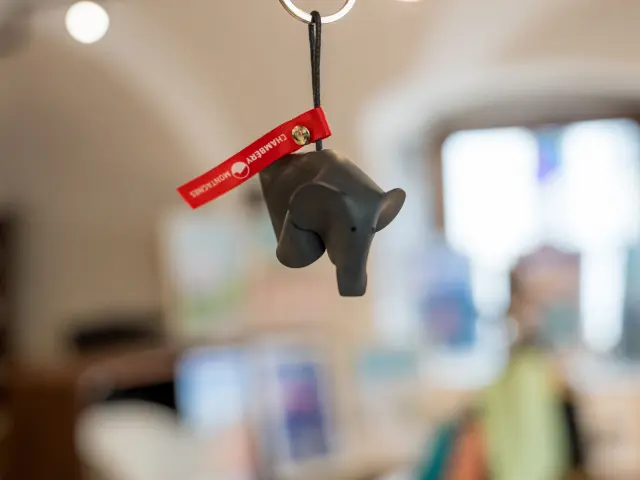
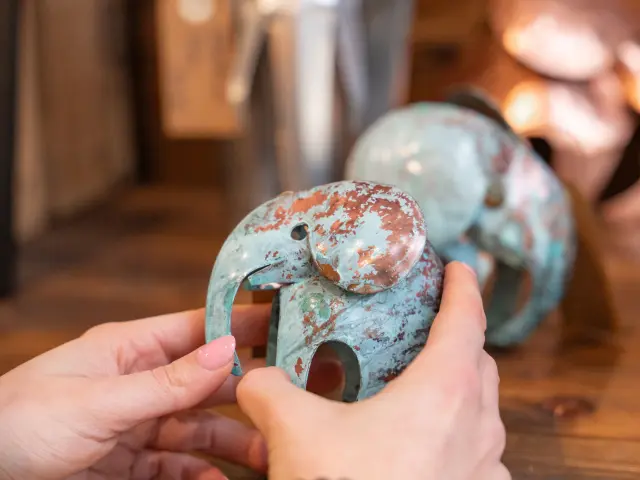
A key ring, a soft toy, a postcard… La Ruche Boutik’, the Tourist Office shop, is just a stone’s throw from the fountain and offers a whole range of souvenirs in the colours of the famous ‘4 sans cul’. Ideal for bringing back a souvenir of a… slightly more reasonable size!

Frequently asked questions… and some very useful answers