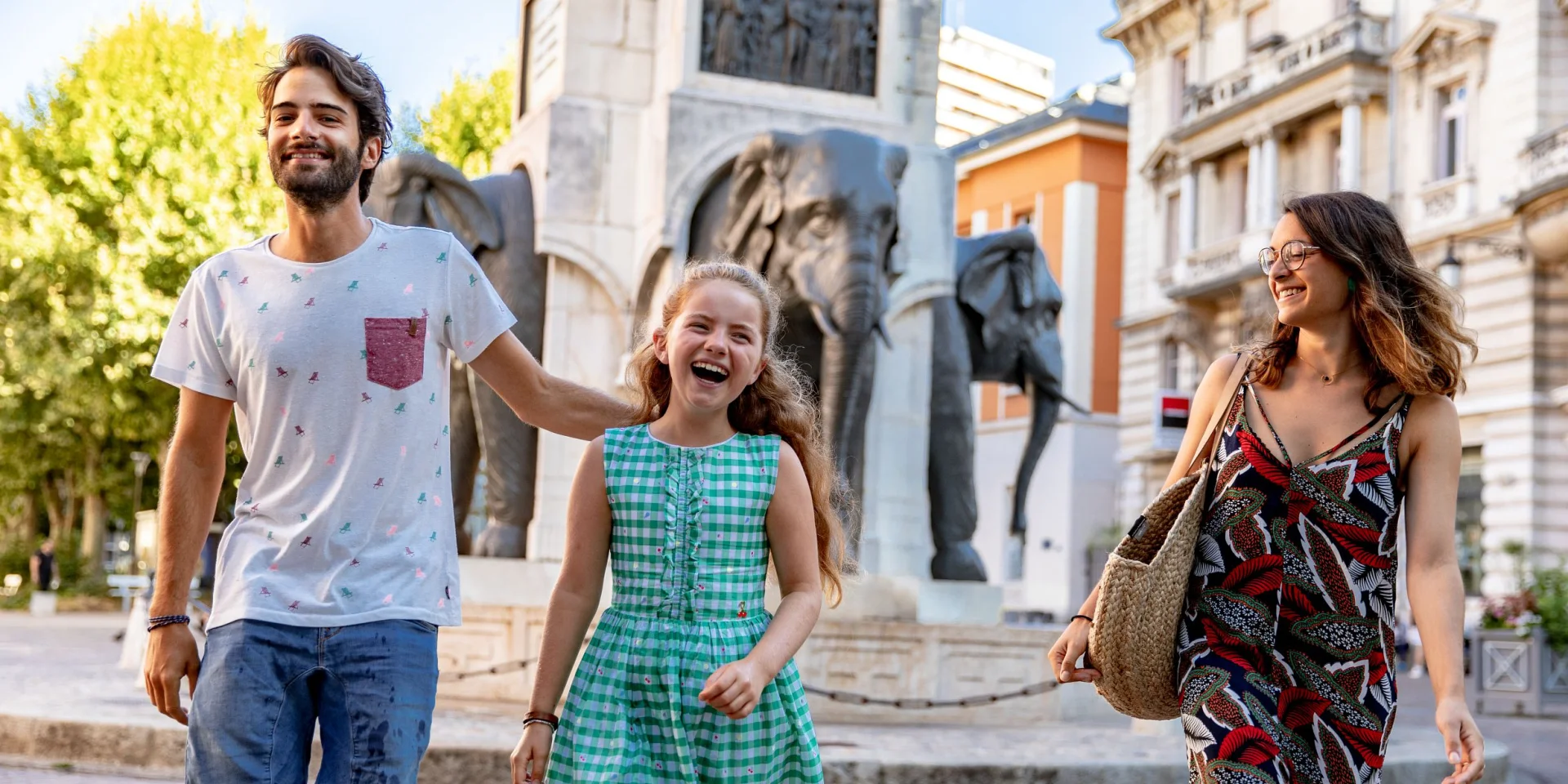
The Elephant Fountain
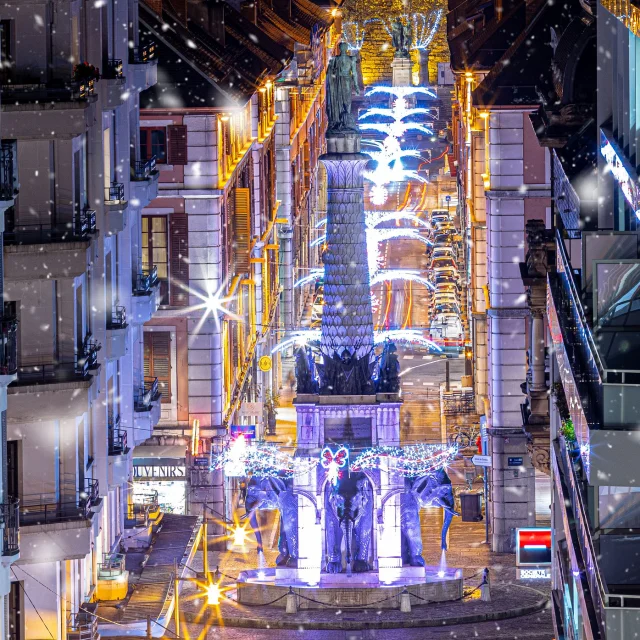
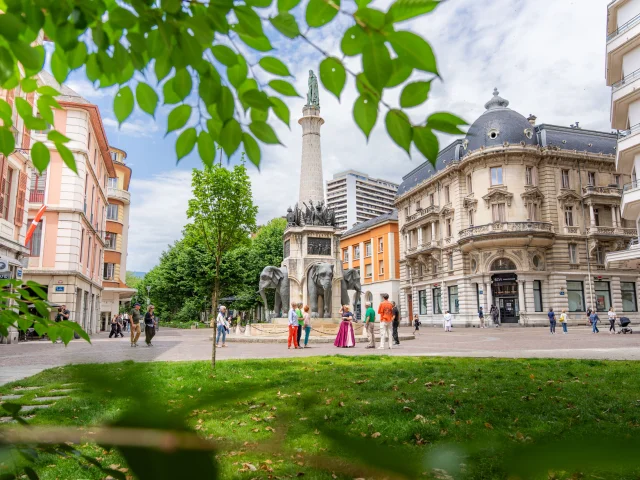
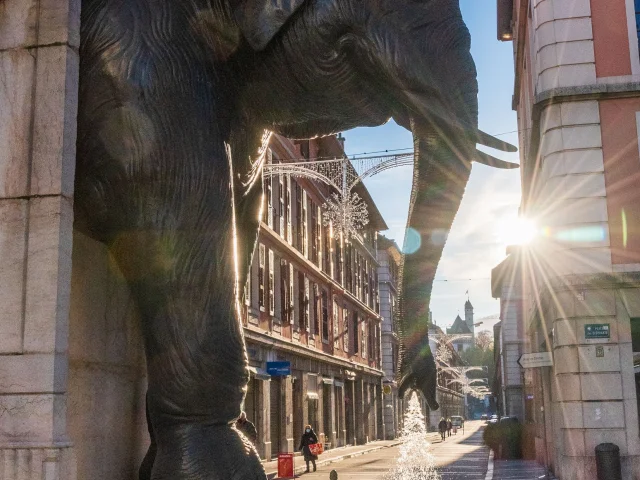
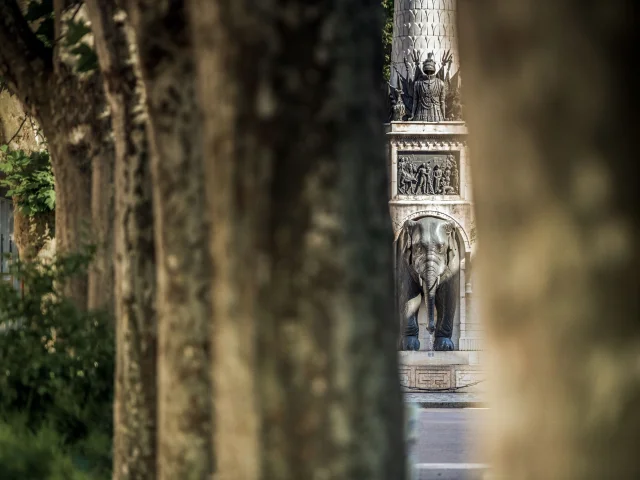
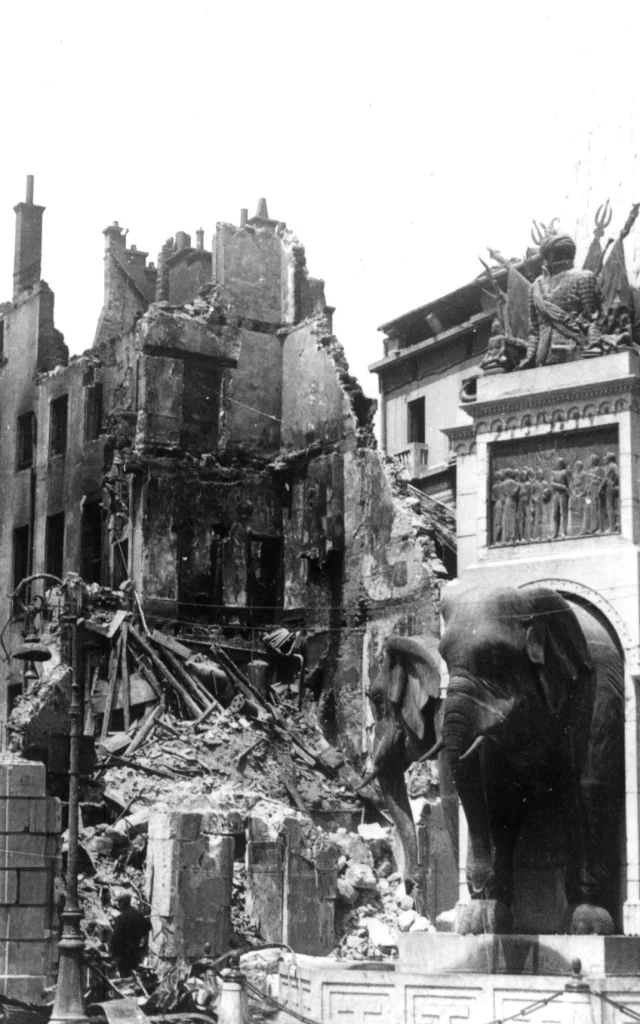
This fountain is a monument nearly 18 metres high that catches the eye and fascinates anyone visiting Chambéry… On the square known as the Place des Éléphants, four elephants joined at the hindquarters spout water into an octagonal basin… Each of them bears a battle tower topped by a bas-relief or an inscription… A tall column resembling a palm tree trunk rises above the structure. At its summit stands the statue of a man dressed as a lieutenant-general of the King of Sardinia, holding what appears to be a document in his right hand and an oriental sabre in the other… This man? He is the Count of Boigne, a great benefactor of Chambéry… Despite appearances, there is no connection between the elephants of Chambéry and Hannibal….
The Sasson
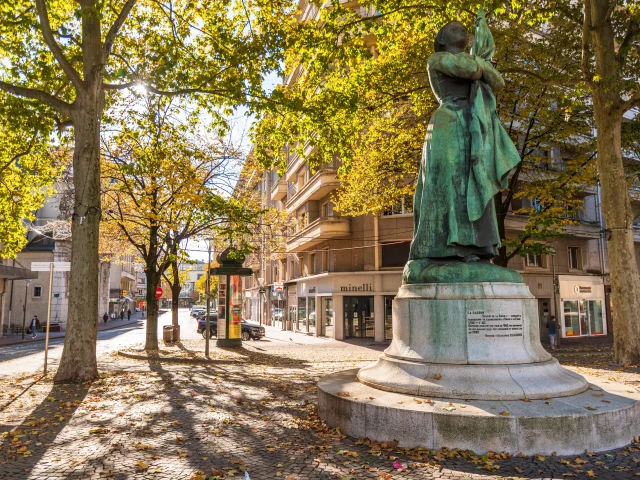
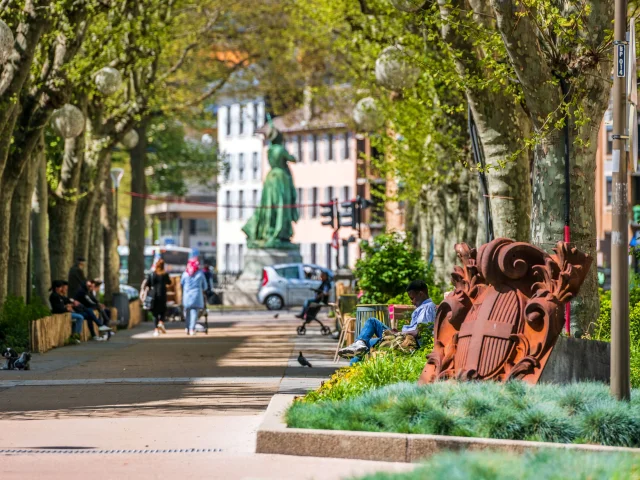
Erected in 1892 to mark the centenary of Savoy’s first annexation to revolutionary France, the statue of La Sasson stands proudly in Place du Centenaire. Its name, which means ‘sturdy woman’ in the Savoyard dialect, is fitting for its appearance: a female figure clutching the French flag to her heart.
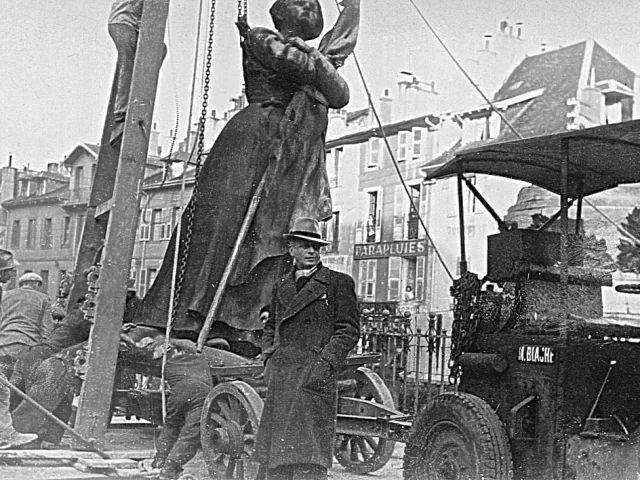
But her fate was a turbulent one. In 1942, requisitioned like so many other bronze monuments to be melted down in Germany, she was dismantled and shipped to Hamburg, her head removed so she could fit into a railway wagon. The empty plinth then became a symbol of resistance: people laid flowers there and gathered around it, and on 14 July 1942, more than 3,000 residents of Chambéry sang *La Marseillaise* and *Le Chant des Allobroges*, which were broadcast that very evening by Radio London.
Rediscovered after the war, its mutilated body lay forgotten for many years in municipal warehouses. It was not until 1982, thanks to the discovery of a cast of its head and the efforts of the Friends of Old Chambéry, that the statue was restored to life and returned to its place, almost exactly where it had originally stood.
Having become, over time, an emblem of Savoy, remembrance and freedom, the Sasson serves as a reminder that a monument can endure the passage of history, withstand oppression, and be reborn as a symbol of collective hope.
480141153 2629375610597394 8592122853603737401 N
Statue of the Sasson
|
Statue of the Sasson
|
Chambéry'CimesYou might also like to listen to...
Chambéry’Cimes
is a podcast
Chambéry Montagnes
Sound recording, editing, mixing and production: Kamel Bouziane, Art AbordSavoie.
Music by Skal.
In this episode: a tour of Chambéry with Chantal George, a guided tour guide specialising in historic monuments; Jacques Viout, vice-president of the Friends of Old Chambéry society; and Julie Chavaribeyre from the tourist office.