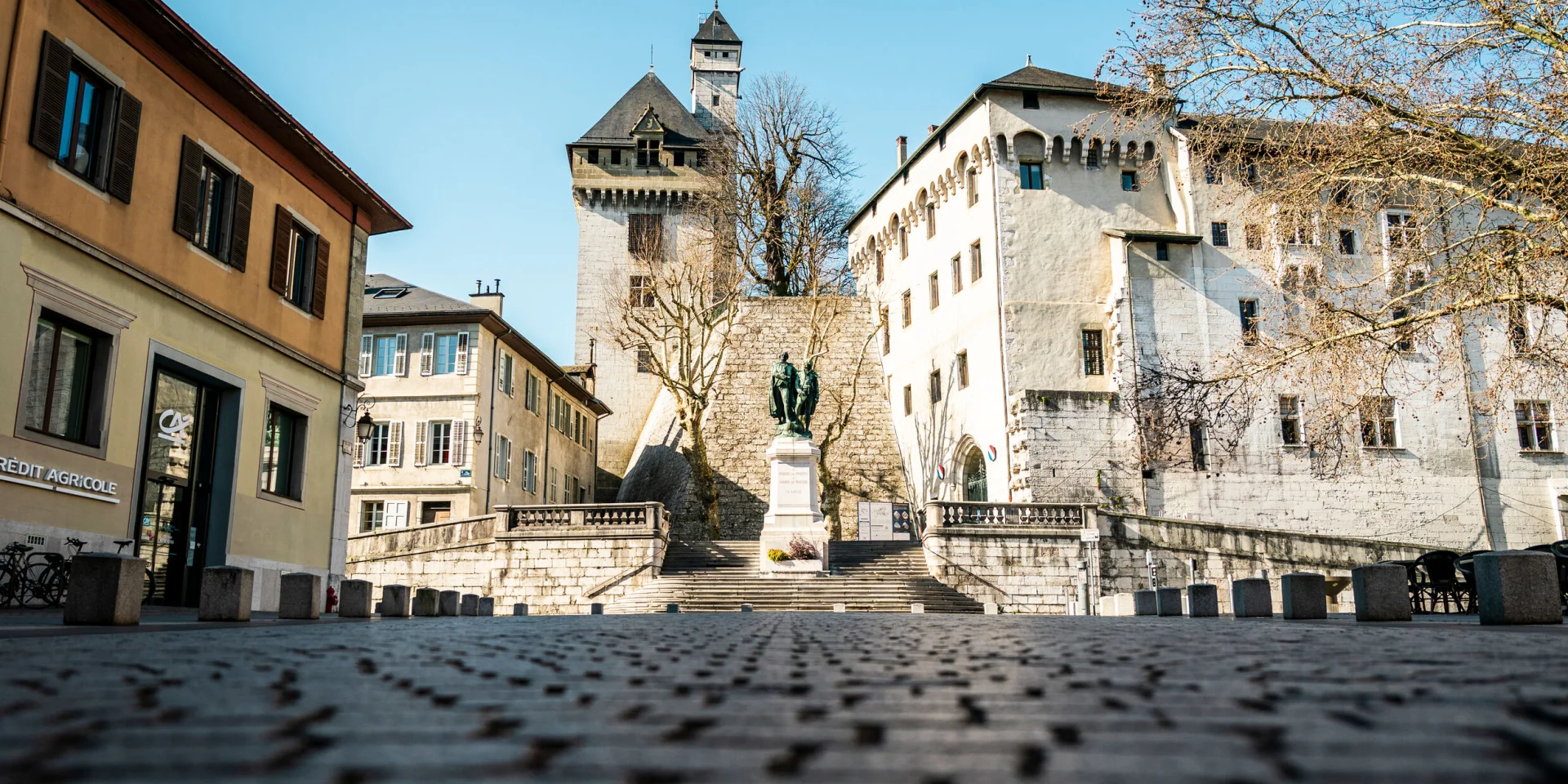
The Castle of the Dukes of Savoy
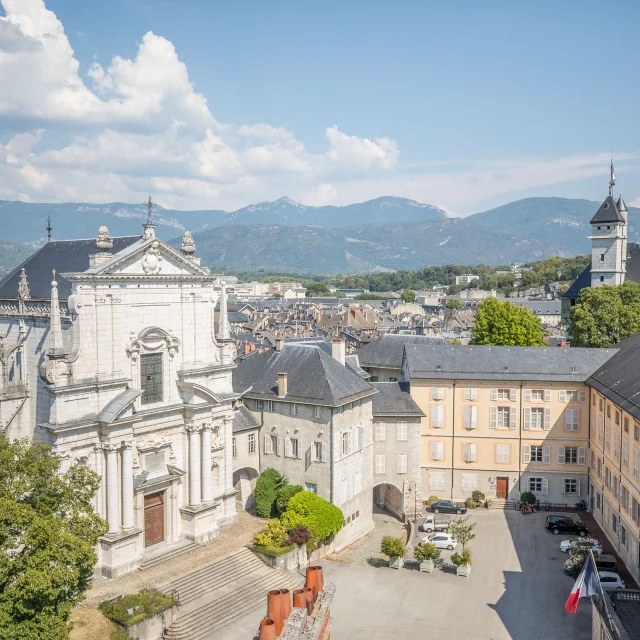
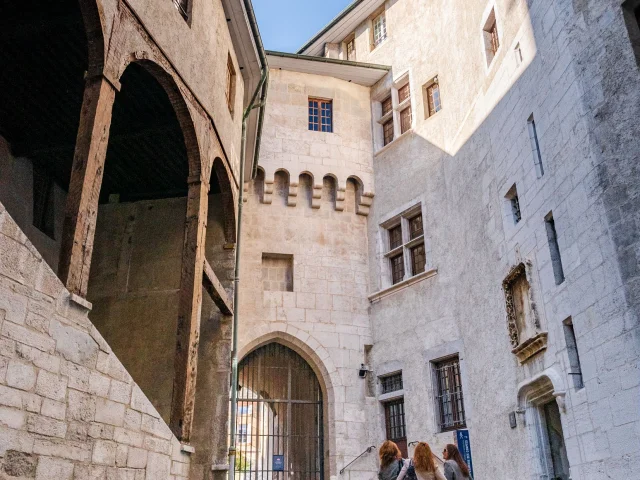
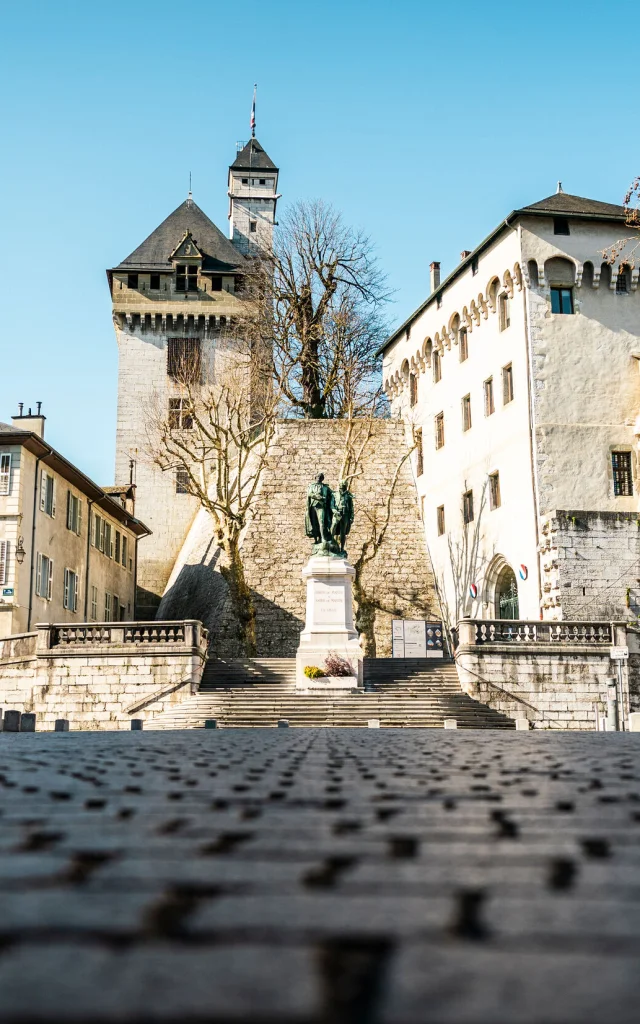
In 1295, Chambéry became the capital of the States of Savoy. The castle, initially a simple wooden fortification, was then transformed into a residence by the Counts of Savoy. It became the centre of power, the seat of government and the ceremonial centre of a dynasty destined to extend its influence far beyond the Alps.
In 1563, Duke Emmanuel-Philibert chose Turin as the new capital. Protected by the mountains and facing what is now Italy, the city embodied the strategic ambition of the House of Savoy. Chambéry, however, retained an administrative role, and the castle remained a venue for official functions.
Over the centuries, the building has evolved: scarred by fires, notably during the Spanish occupation and later during the Revolution, it has been rebuilt, extended and adapted to the needs of each era.
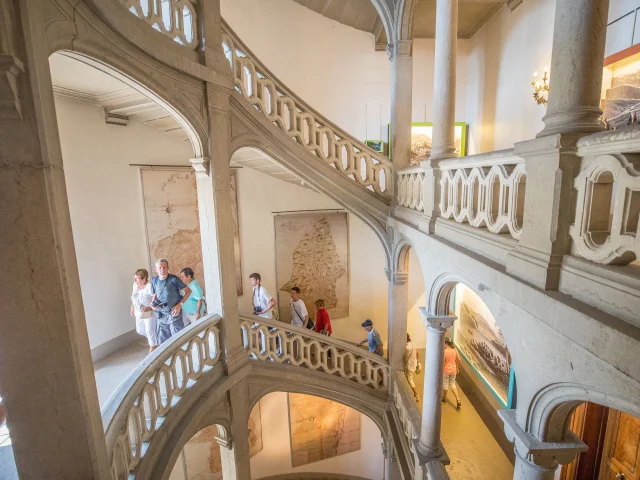
Today, the château continues to house the prefecture and the departmental council. Straddling heritage and public life, it remains a valuable testament to Savoyard history and a powerful symbol of Chambéry.
-640x480.webp)
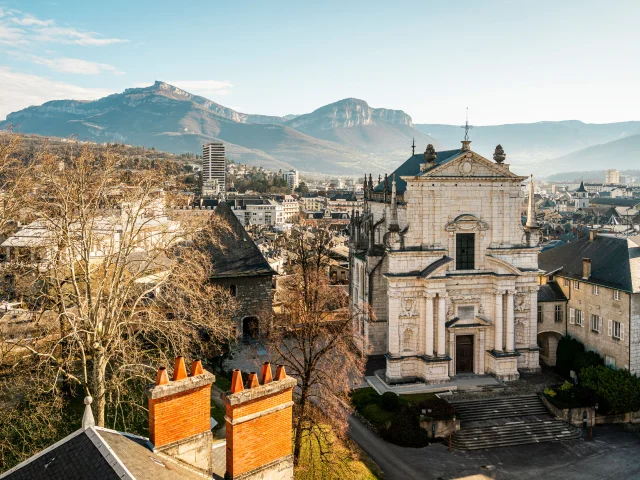
The Sainte-Chapelle
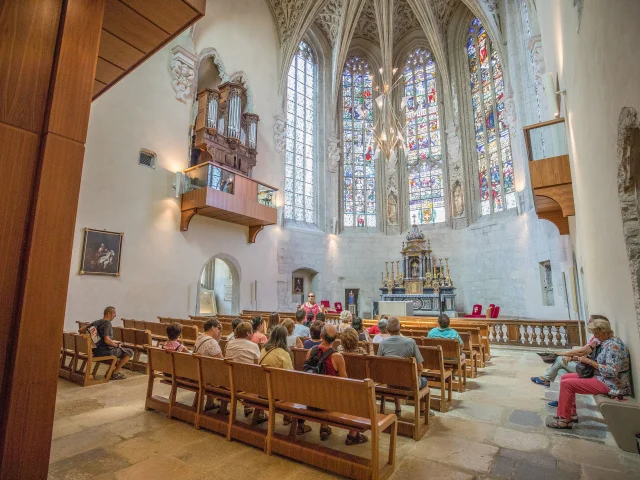
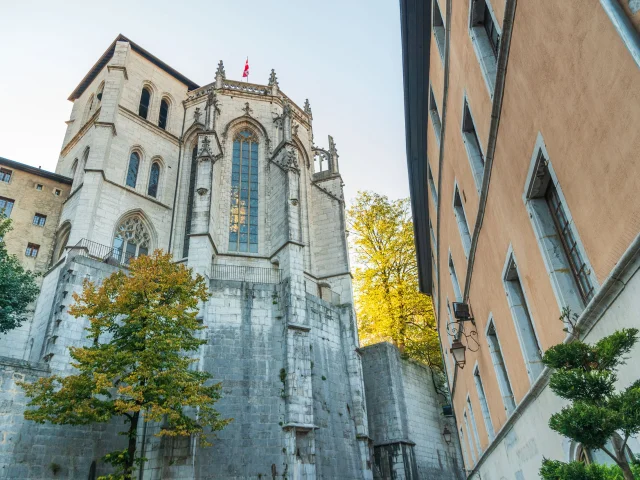
Built in the 15th century, the Sainte-Chapelle at the Castle of the Dukes of Savoy reflects the ambition and prestige of the Savoy dynasty. From 1502 onwards, it housed the Holy Shroud, a major Christian relic, which for several decades attracted pilgrims and sovereigns from all over Europe.
Following the transfer of the capital to Turin in 1563, the relic followed the ducal court, but the chapel retained its splendour. Behind its Gothic façades lie remarkable trompe-l’œil decorations, restored in the 19th century, which lend the building a striking sense of depth and richness.
Today, the Sainte-Chapelle remains one of Chambéry’s most iconic monuments.
It can be visited as part of guided tours.
Chambéry'CimesYou might also like to listen to...
The Grand Carillon
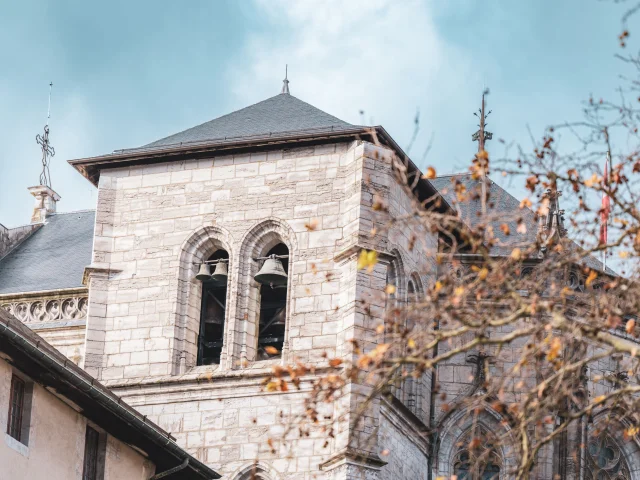
Installed in 1993 in the Yolande Tower of the Castle of the Dukes of Savoy, the Grand Carillon is the work of the Paccard Foundry, the renowned Savoyard master bell-founder. With its 70 bells, it is the largest carillon in France and the eighth largest in the world.
What makes it special? An exceptional uniformity of tone, achieved because the bells were cast by the same bell-maker in just eighteen months. Crafted using innovative techniques – notably incorporating carbon fibre – it marked a turning point in the art of bell-making and has inspired projects around the world.
Resounding equally well in Savoyard melodies and contemporary works, the Grand Carillon regularly brings Chambéry to life with its concerts, which can be enjoyed during guided tours. A true sonic signature, blending heritage and modernity.
-640x480.webp)
-640x480.webp)
Chambéry’Cimes
is a podcast
Chambéry Montagnes
Sound recording, editing, mixing and production: Kamel Bouziane, Art AbordSavoie.
Music by Skal.
In this first episode: a tour of Chambéry with Chantal George, a guided tour guide specialising in historic monuments; Jean-Pierre Vitto, carillonneur; and Julie Chavaribeyre from the Tourist Office.